Lessons learned from a Sunday morning bike crash
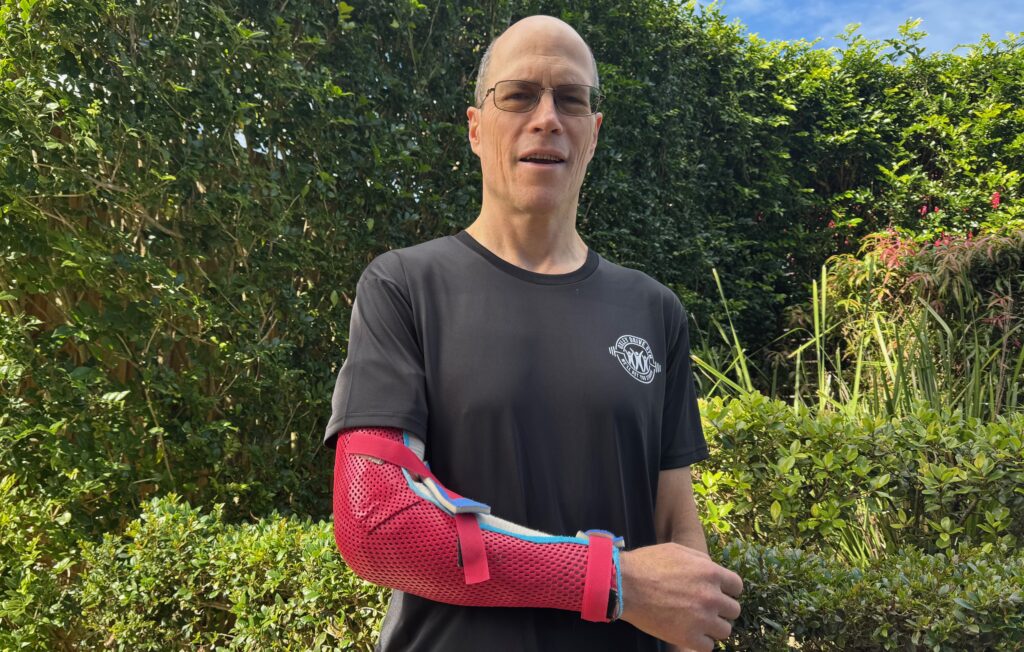
A few Sunday mornings ago, as I was returning home from a 4-hour training ride, I came off second best when a car pulled out in front of my bicycle. The subsequent collision left me lying on the road, clutching a broken elbow, and the day went downhill from there.
In such circumstances, it’s amazing how clearly the brain works, as I remember thinking, “So this is how it ends”, while still lying in pain on the road. Subsequent surgery and physiotherapy sessions confirmed that I had to abandon my plans to ride up the fearsome Mont Ventoux in France this September.
This unfortunate outcome has given me pause for reflection. Now, I’m all for setting and accomplishing goals. It’s how I have achieved a great many milestones in my life – qualifications, physical challenges, and personal projects. By and large, I have found applying enough focus, resources and determination has been a winning formula to overcome obstacles and accomplish goals. But what happens when despite one’s best efforts, the goals simply can’t be accomplished? What then? How to put aside the disappointment (which can be intense) and move forward?
I was curious as to what this might mean both for future personal accomplishment and for the business owners that I coach. In the first instance, I realised that I had to pick up the pieces after abandoning my Mont Ventoux goal, and secondly, I wanted to lay some foundations as to how these lessons might apply more generally.
This article is the result of considering these questions.
Take stock and call it for what it is
Moments after my crash, I pretty much knew that my goal would not be accomplished. There was to be no return on training six days per week since the beginning of this year. This was confirmed by a subsequent discussion with a physio about the time it will take to adequately recover. There is no sense in fooling oneself or living on false hopes. Time to move on.
Don’t give up on goal setting and chasing
I have accomplished too much to discard goal setting and chasing as the means to accomplish big tasks.
For example, I remember the early days of the Slipstream Group, where we consistently failed to meet our quarterly targets and hence not earn the designated team reward. That didn’t stop us from setting a fresh goal for the next quarter and tackling this with renewed resolve. Ultimately, we achieved one of these goals, then we consistently achieved them thereafter.
Look for the positives
In the case of my crash, this was easily done. The accident could have been much worse. There was no head knock, the car did not run over me, and no one else was hurt. Inconvenient as it is, a broken arm is not nearly as bad as a broken leg, which I have previously experienced. I can move around, exercise, and complete many day-to-day tasks. Global crises permitting, I still plan to have a European holiday this September. All up, I have much to be grateful for.
Take time to reflect
In the case of my Mont Ventoux goal, I recognise that this was a way of focusing my physical training and to plan an overseas adventure. Riding to the top of Mont Ventoux would have been nice, but not doing so still means that I can be fit and enjoy wonderful overseas trips. It’s also the opportunity to take stock. Having ridden up many iconic European mountains, does it really matter if I don’t ride up another one?
Instead, I’ve come to think that it may prove more beneficial to find a safer fitness challenge, such as completing a Hyrox event or the simulated racing scene for indoor cycling. Doing so will provide new experiences, require new training methods and ultimately, make me a more rounded athlete.
Time to reset
It took a global pandemic for me to realise how motivating goals are for my training. During COVID, all events for which I had signed up were cancelled, and hence I shelved cycling until the pandemic was over. Instead, I set off in another direction, setting up a home gym and training family members. This proved such a fulfilling journey that it ultimately led to obtaining qualifications to become a personal trainer and adding PT to the services I provide.
It took some time for these goals to become clear in my mind, but upon achieving this clarity, I determinedly worked towards achieving them. Without the obstacles created by the pandemic, these outcomes never would have happened.
It may not be easy
Not for the first time, I am engrossed in getting back to full capability. This means doing uncomfortable rehabilitation exercises throughout each day, seeing the medical experts when required, and maintaining a positive attitude in the face of physical pain. There are periods where improvement seems elusive. However, I have no doubt that choosing positivity and visualising a return to full health will hasten the healing process.
Don’t play the blame game
I admit that at times I have felt frustration, even anger, in suffering the daily pain and inconvenience of a broken limb. It is very easy to resent the driver whose carelessness was responsible. However, I am doing my absolute best to put this from my mind because the resultant negativity is unhelpful.
What the driver did and didn’t do, and the resultant medical expenses I am incurring, is largely irrelevant to my recovery and future progression. For me, it’s not a matter of forgiveness. It’s a matter of applying my mind to make the best of my situation and, more importantly, to enjoy accomplishing goals for many years to come. Quite simply, I don’t want negativity in my life.
Utilise and appreciate the support
I’m fortunate that many people are assisting my recovery. My wife Jill has selflessly taken on many support tasks, for which I am truly appreciative. A surgeon selflessly worked back late, thereby starting my recovery within days of the accident. A physio has been my weekly guide to rehabilitation, colleagues have rescheduled my speaking engagements, clients have sent encouraging good wishes and neighbours are very willing to help. This support has been wonderful for morale.
Overall
Whilst setbacks are inevitable, how one chooses to respond to them is not. I hope these guidelines prove helpful when and if you need them.
Thanks for reading.