
Practicalities about the why, when and how to leave your current Firm.
Introduction.
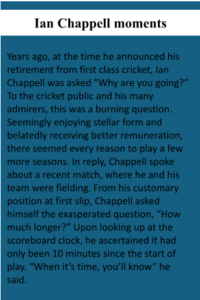 I was speaking with a colleague a while back, at the conclusion of a successful podcast interview we had done together. “That was great” he said. “Now, is there anything that I can do for you in return?” It seemed the perfect time to tackle an issue which had been increasingly circulating on my mind. “Yes, there is” I replied. “How does one know when it’s time to go?”
Helpfully, my colleague’s input proved insightful, significantly advancing the date of my retirement from the business I co-founded.
In this article, I’m going to explore how you too determine the answer to this important question.
Go from what?
At the outset, I’m directing my comments mainly to work-related situations, such as your job or a business in which you are an equity holder. I venture to say that there will also be other applications such as your volunteer positions where this will apply. I am however ruling a line to exclude matrimonial advice 😊
Before you hand over a resignation letter, it pays to stop and reflect. Maybe it’s not a new job or a different career you need but a good holiday and/or for colleagues to acknowledge the work you’ve been doing. Or perhaps a restructure of your situation is called for.
This seems familiar
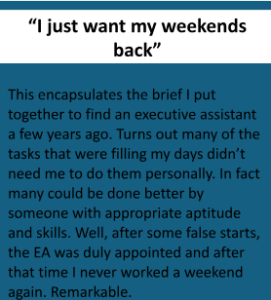 When I look back over my career, I see a very familiar pattern in the roles I’ve played –
- work hard and enthusiastically, creating a reputation for getting stuff done
- extend the working hours, reduce out of work activities
- attract more responsibility and expectation, mostly in my OK Zone, not my Genius Zone
- accumulate stress related to getting all the work done whilst meeting my own high standards
- feel undervalued and unappreciated
- there’s no longer time/need for energising Genius Zone activities
- hit breaking point, then leave
- cycle repeats
Breaking such cycles firstly requires awareness that they exist. Talking things through with an invested colleague certainly helps here.
Other circuit breakers I’ve used to varying degrees of success include –
- Get much more effective in your work practices – look for a separate article I’ll write on this
- Delegate to talented people, which requires you to recruit, train, guide and encourage them
- Negotiate additional holidays, meaning more time out of the pressure cooker
- Work closely with a financial planner. An astute adviser will improve your financial circumstances and expand your options. Maybe you can bring your intended retirement forward or you don’t need to be working full time. Potentially, you don’t need the income you can only earn from a super-demanding role. It’s good to put numbers to such possibilities and talk through the alternatives with an informed professional who is experienced in this area.
- Go part time. For sure, it’s a difficult concept to engage with if you’re feeling overwhelmed at 50+ hours per week but it’s remarkable how flexible many employers and business partners will be to retain your services, not to mention what an extra day off can do for one’s wellbeing
Legitimate reasons to consider an exit
In past generations it was expected that you’d spend an entire career in one role, maybe even with the one company. That’s not the case these days. There was a timely message, “It’s OK to leave your job”, I saw plastered on a billboard one Sunday as I was weighing up my future. (I bit the bullet and left that job.)
Perhaps you’ll relate to some of the factors that have played a part in my decisions to leave various organisations over the years
- You’ve been unable to change improve your circumstances from the inside. “I’m not even going to read that” said one boss to me about the notes I’d attached to my performance review questionnaire about making my workload more manageable.
- A role that initially suited you to a tee has evolved into a different set of requirements. “We don’t need any more new material” a CEO told me. Too bad that’s what I do best.
- Square peg in a round hole. There’s a divergence in values, direction, strategies or priorities to what you would like to see. Sometimes it’s not a matter of right vs wrong, just differences.
- You would like to take on a passion project or set up your own business. As one of my role models said, “Sometimes you have to get off the ocean liner to be on a speed boat”.
- You’re not enjoying the job anymore. When Sunday evening comes around, what are your primary emotions about the week ahead?
- You’ve read “Die with Zero” and become convinced it’s time to stop working and start really living. 😊
But how do I actually get out?
The more senior and responsible your roles, the more likely it will be that extricating yourself will come with complications. So, regardless of whether leaving is a carefully considered conclusion or from a snap decision, here are some issues you’ll likely need to resolve before you’re free to go –
- Finding a buyer for your equity – the shorter your time frame the more compromises you’ll likely need to make, on price and/or how long it takes to get paid out
- Don’t fixate on the sale price. The conditions attaching to your equity sale – earn out period, performance targets, vendor finance, client retention etc – all need to be taken into consideration
- Communicating your decision – to your boss, fellow shareholders, colleagues, clients and associates
- Transitioning your clients to other advisers
- Contracts, leases and other guarantees you might have put your name to
- Legal documentation relating to selling your equity and vendor finance if applicable
Bringing this to a conclusion
“Die with Zero” by Bill Perkins. Consider this essential reading.
Whether you go or stay, the name of the game is good decision making and astute execution. Potentially stress, illness, tiredness or a mixture of emotions may compromise your perspective and/or your negotiations. For these reasons, there’s benefit in retaining a mentor or colleague to help guide you through the process.
Keep in mind that there’s always a way through such issues. Ultimately, everyone exits so perceived difficulty in getting out shouldn’t be the main reason that you stay!